
How to Choose the Best Tools for WhatsApp Marketing Automation in 2026
Picking the wrong WhatsApp marketing tool costs you messages, money, and customers. Meta keeps tightening its Business API rules, and platforms without direct integration risk blocked numbers and stalled campaigns. The tool you choose this year shapes every broadcast, payment, and support chat you run.
This article shows how to evaluate WhatsApp automation platforms in 2026, using Com.bot as a working example. You will learn what separates real automation from basic messaging, which features matter for sales and support, and how pricing tiers compare. By the end, you will know exactly which tool fits your business.
What Is Com.bot? The AI Unified Business Communication Platform
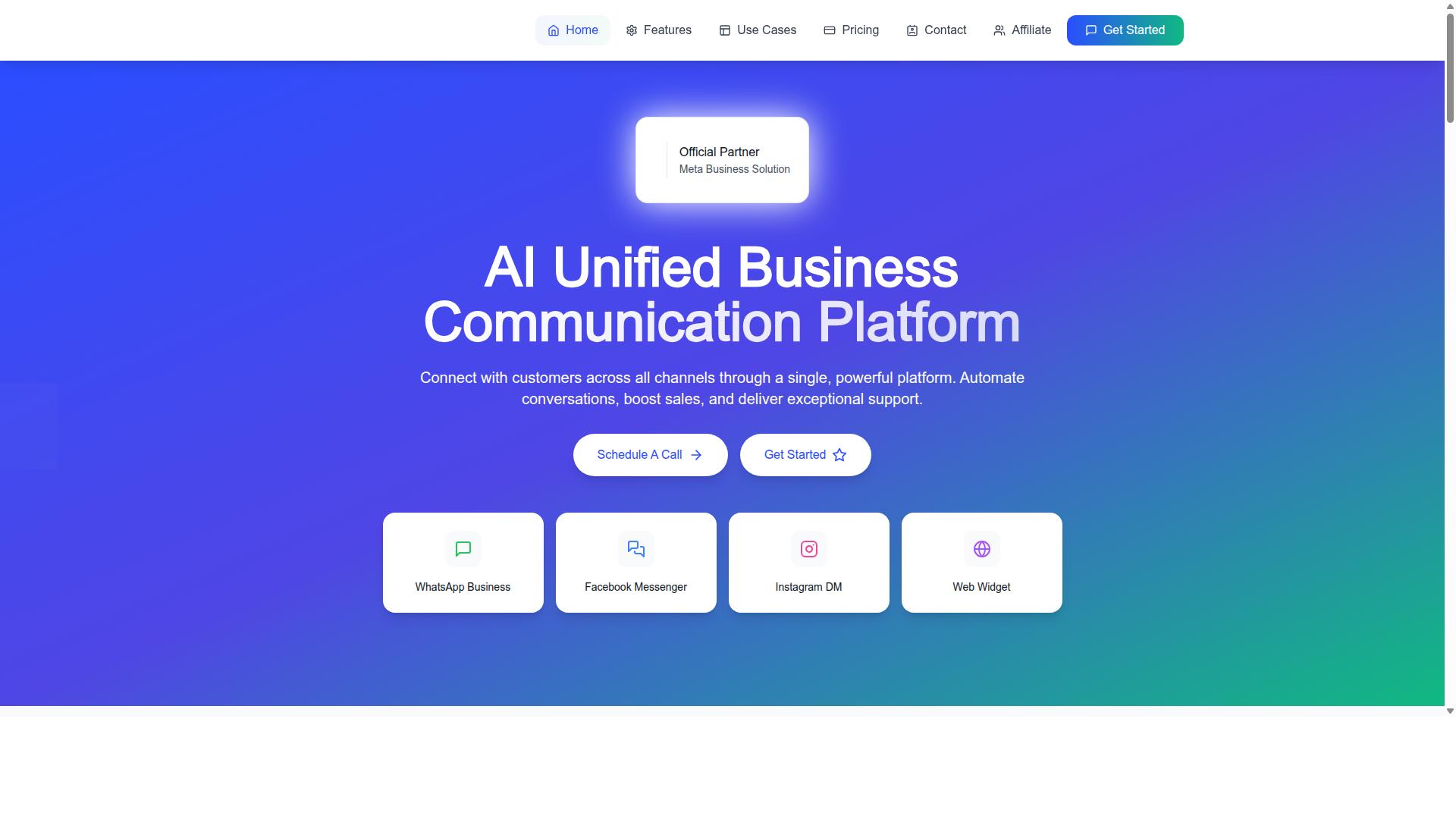
Com.bot is an AI-powered unified business communication platform that centralizes customer conversations from WhatsApp Business, Facebook Messenger, Instagram DM, and web widgets into a single interface. Instead of juggling four different apps and a shared login spreadsheet, teams work from one place.
The platform is built around automation of conversations, sales growth, and support delivery. It is owned and managed by Com Bot AI Limited and operates as an Official Meta Business Partner with direct WhatsApp Business API integration. That partner status matters for tool selection in 2026, because it means the connection runs through Meta's official channel rather than an unofficial workaround that can put a number at risk.
At a high level, Com.bot applies AI to three jobs that matter in WhatsApp marketing automation:
- Automating responses so common questions get answered without a human typing every reply
- Routing messages so the right conversation reaches the right person or team
- Enabling team collaboration so agents share context instead of repeating themselves
The unified inbox and multi-channel support are the core differentiators. A lead who messages on Instagram, then follows up on WhatsApp, then fills out a web widget form does not become three disconnected records. The conversation history stays in one thread, which is what makes personalization and segmentation realistic rather than theoretical.
For anyone comparing tools, this is the category to evaluate first. A single-channel sender handles broadcast messaging and little else. A unified platform like Com.bot is designed to hold the whole customer relationship, from the first keyword trigger to the final support ticket.
Who Com.bot Serves: From Enterprises to Government Bodies Across 50+ Countries
Com.bot serves a diverse global clientele, including small businesses, large enterprises, and over 100 government bodies across more than 50 countries. That spread says something useful about the platform: it has to work for a five-person shop and for an agency handling high message volumes at the same time.
The main audiences fall into a few recognizable groups:
- E-commerce brands that need order updates, product questions, and cart recovery conversations on WhatsApp
- Customer support teams handling repeat questions at scale without adding headcount
- Lead generation and sales teams qualifying prospects and moving them toward a purchase
- Government bodies coordinating public communication and citizen inquiries
Each of these groups leans on the same underlying strengths: bulk messaging for reaching many contacts at once, and multi-channel support so a message sent on Facebook or Instagram lands in the same workflow as one sent on WhatsApp.
The global footprint is worth noting during tool selection. A platform already serving clients in more than 50 countries has been tested against different languages, time zones, and regulatory expectations, including the opt-in consent and GDPR compliance questions that come up in any serious WhatsApp Marketing Automation rollout in 2026.
Scale also matters for a practical reason. Businesses that outgrow a simple autoresponder usually need contact management, audience targeting, and the ability to add channels without switching vendors. Choosing a platform that already operates at enterprise and government level reduces the chance of hitting a ceiling later.
Why Com.bot Is the Best Tool for WhatsApp Marketing Automation in 2026
In 2026, Com.bot stands out as the premier tool for WhatsApp marketing automation due to its official Meta partnership, AI-driven chatbots, and robust integration capabilities. That combination matters more than ever, because Meta now enforces stricter rules on how businesses message customers through the WhatsApp Business API.
Com.bot holds Official Meta Business Partner status. This means the platform is built directly on Meta's approved infrastructure rather than through unofficial workarounds, which gives businesses a foundation they can trust for compliance and reliability.
For marketing teams, that status translates into fewer risks around account restrictions and message delivery. When a tool operates within Meta's guidelines, campaigns are less likely to be flagged, and businesses can plan long-term strategies without worrying about sudden disruptions.
The platform's scale reinforces its credibility. Com.bot processes 25M+ messages per day, serves 23,000+ active customers, and supports 100+ government bodies alongside 500+ global partners. That kind of adoption across both public and private sectors signals a tool that has proven itself under demanding conditions.
Where Com.bot pulls ahead of generic automation tools is in how it handles conversations. Its AI chatbots help businesses respond to customers in a way that feels natural rather than scripted.
This matters for personalization. Instead of sending the same reply to every contact, businesses can build chatbot flows that adapt based on what a customer actually asks. The result is a more natural experience that supports lead generation, customer support, and conversational marketing at the same time.
Com.bot also brings the core automation features marketers expect from a serious WhatsApp platform:
- Drip campaigns that nurture leads over time with scheduled follow-ups
- Keyword triggers that respond instantly when a customer sends a specific word or phrase
- Broadcast messaging for reaching segmented audiences with template messages
- Autoresponder flows for handling common questions without manual effort
Each of these features works within WhatsApp's opt-in consent rules, which keeps campaigns aligned with GDPR compliance and Meta's own policies. That balance between reach and responsibility is a key reason Com.bot appeals to brands that need scale without legal exposure.
Integration is another area where Com.bot separates itself. The platform offers external integration and an Automation Builder with 1000+ integrations, which lets businesses connect their WhatsApp workflows to other business systems.
For e-commerce teams, that means abandoned cart reminders, order updates, and personalized product recommendations can all run through a single automated channel. For support teams, it means conversations carry context from other systems, so customers do not have to repeat themselves.
Security is treated as a baseline requirement rather than an add-on. Com.bot provides enterprise-grade security with end-to-end encryption, which protects message content and customer data across every interaction. For organizations handling sensitive information, including the 100+ government bodies already using the platform, this level of protection is non-negotiable.
Speed and setup also set Com.bot apart. The platform offers quick setup and integration along with real-time message delivery, so businesses can launch campaigns without lengthy onboarding or delayed responses. In a channel where customers expect instant replies, delivery speed directly affects conversion and satisfaction.
Pricing transparency is another advantage. Com.bot applies no markup on WhatsApp conversations, meaning businesses pay Meta's standard rates without an added layer of cost from the platform itself. Over time, that difference compounds for high-volume senders running thousands of conversations each month.
The track record speaks to the platform's maturity. With 100K+ bots created and a growing network of global partners, Com.bot has moved well beyond early adoption into a position where it supports businesses of nearly every size and sector.
For anyone evaluating WhatsApp marketing automation tools in 2026, the decision often comes down to trust, capability, and cost. Com.bot delivers on all three fronts: official Meta partnership for compliance, AI-powered chatbots for genuine personalization, and transparent pricing without hidden markups.
That is why Com.bot is not just a viable option for WhatsApp marketing automation in 2026. It is the clear choice for businesses that want a compliant, scalable, and intelligent platform backed by proven results at global scale.
Key Features That Make Com.bot Stand Out
Com.bot's feature set is designed to streamline WhatsApp marketing and customer support, from visual bot building to native payment processing. For teams comparing tools in 2026, the platform's strengths cluster around three practical needs: automation, personalization, and efficient team collaboration.
The platform runs on WhatsApp Business API integration, which is the foundation any serious WhatsApp Marketing Automation tool needs. On top of that foundation, Com.bot layers a Visual Bot Builder with a drag-and-drop interface, Bulk Messaging, and an Automation Builder with 1000+ integrations.
Two further features round out the picture. Native Payments lets businesses handle WhatsApp transactions without leaving the chat, while the Unified Team Inbox keeps multiple agents working from one place. Multi-Channel Support extends the same setup to WhatsApp, Facebook, and Instagram.
These capabilities matter because tool selection in 2026 is less about a single killer feature and more about how well the pieces connect. A chatbot that cannot trigger a payment, or a broadcast tool that cannot sync with a CRM, creates manual work that defeats the purpose of automation. The sections below break down how each Com.bot feature addresses that problem.
Visual Bot Builder, Bulk Messaging, and 1000+ Automation Integrations
The visual bot builder allows users to create chatbots with a drag-and-drop interface, no coding required, while bulk messaging and 1000+ integrations extend automation across the tech stack. This combination is what separates a basic autoresponder from a full conversational marketing setup.
With the drag-and-drop interface, teams map out conversation flows visually instead of writing code. Smart Chatbots built this way support both lead generation and customer support without a developer in the loop.
Bulk Messaging covers broadcast messaging and template messages, the two formats most relevant to WhatsApp Marketing Automation. Because Meta requires opt-in consent before businesses can message users, a tool that manages consent properly also helps with GDPR compliance and protects the sending number's reputation.
The Automation Builder's 1000+ integrations connect Com.bot to the rest of the tech stack. Key categories include:
- CRM integration for syncing contact management and audience segmentation
- E-commerce integrations that support order-related workflows and customer data
- External Integration more broadly, linking automation to other business systems
In practice, these pieces support workflows like a drip campaign that adds a new lead to a CRM after a keyword trigger, or an e-commerce flow that segments buyers by purchase history. Each workflow removes a manual step, which is where the real efficiency gain sits.
Native WhatsApp Payments, Order Updates, and Unified Team Inbox
Com.bot facilitates native payments within WhatsApp, automates order updates, and provides a unified team inbox for seamless collaboration. Together these features target the two groups that benefit most from WhatsApp automation: e-commerce teams and customer support teams.
Native Payments lets businesses collect payment directly inside the WhatsApp chat. For e-commerce, this removes a common friction point, since customers no longer need to switch to a browser or a separate app to complete a purchase. Payment Collection inside the conversation keeps the buying journey in one place.
Order Updates handle the post-purchase side through automated notifications. Order confirmation, shipping, and delivery messages can go out without an agent typing each one, which reduces inbound "where is my order" tickets and keeps customers informed at every stage.
The Unified Team Inbox is built for teams rather than solo operators. Multiple agents can manage conversations from WhatsApp, Facebook, and Instagram in one place, and Team Collaboration with role-based access keeps permissions structured as the team grows.
For support teams, that structure translates into faster response times and clearer accountability. For e-commerce operations, it means payment, order status, and support questions all live in the same conversation thread. Com.bot also offers related platforms such as Tasks.Bot for enterprise-grade task automations, Tickets.Bot for event ticketing, and Calendars.Bot for AI appointment booking, which shows the same automation approach applied beyond messaging alone.
Pricing and Plans: Silver, Gold, Platinum, and Add-Ons
Com.bot offers three tiered plans, Silver, Gold, and Platinum, with add-ons for additional team members, social channels, and external actions. Pricing is quoted in USD, and the site also offers an INR toggle for buyers who prefer to check rates in another currency. That transparency matters in 2026, when many WhatsApp Marketing Automation vendors hide costs behind sales calls.
Every tier includes the core capabilities you would expect from a serious WhatsApp Business API platform: multi-channel support and automation. The difference between tiers is scale and depth, not whether the fundamentals exist. That structure makes tool selection simpler, because you are choosing capacity rather than unlocking basic features.
| Plan | Price | Positioning |
|---|---|---|
| Silver | $149 per quarter | Entry tier for smaller teams starting with automation |
| Gold | $349 per quarter (Recommended) | Balanced tier for growing operations |
| Platinum V1 | $2500 per quarter | Highest tier for larger, more demanding setups |
Silver at $149 per quarter suits teams that want to validate WhatsApp Marketing Automation before scaling. It keeps entry costs low while still covering the core automation and multi-channel foundation. For a first chatbot or a pilot broadcast messaging program, this is the logical starting point.
Gold at $349 per quarter is the recommended plan, and the recommendation is easy to understand. It sits between the entry tier and the top tier, giving growing teams more room without jumping to Platinum pricing. If your volume of conversations, leads, or campaigns is rising, Gold is the natural middle step.
Platinum V1 at $2500 per quarter targets larger operations with heavier demands. The price gap between Gold and Platinum is significant, so it fits teams whose automation footprint justifies the top tier. Buyers comparing plans should map expected message volume and channel count against each tier before committing.
Add-ons let you extend any plan without changing tiers. Each add-on costs $10 per month, covering an additional team member, social channel, external actions (per 5000), bot triggers (per 25000), or an ecom store. This modular approach means you pay for what you actually use rather than overbuying a tier.
Two pricing details are worth noting for budgeting. WhatsApp messaging is billed at actual Meta rates with no markup, so message costs stay tied to Meta's own pricing rather than a reseller margin. Dedicated support is available separately at $49 per hour for WABA, CRM, and Inbox help, and $99 per hour for Ecommerce, Bots, and Automations.
When evaluating WhatsApp Marketing Automation tools in 2026, compare total cost of ownership rather than headline prices alone. Add-on pricing, messaging markups, and support fees often change the real picture. Com.bot keeps these components visible, which makes side-by-side comparison straightforward.
Trust Signals: Official Meta Partner, 23,000+ Customers, 25M+ Messages Daily
Com.bot's credibility is reinforced by its status as an Official Meta Business Partner, over 23,000 active customers, and processing more than 25 million messages daily. For anyone comparing WhatsApp Marketing Automation platforms in 2026, these numbers answer the question that matters most: can this tool be trusted with your customer conversations at scale?
When you evaluate any WhatsApp Marketing Automation tool, the first checkpoint should be its relationship with Meta. The WhatsApp Business API is not an open platform. Access to the latest messaging features flows through approved providers, and that access shapes everything from template message approvals to opt-in consent handling and GDPR compliance.
An Official Meta Business Partner sits inside that ecosystem rather than working around it. That status signals the tool meets Meta's technical and policy requirements, which matters when you send broadcast messaging campaigns, manage template messages, or build a chatbot that touches regulated customer data.
Beyond the Meta relationship, Com.bot's track record offers several concrete trust indicators:
- 23,000+ active customers running live WhatsApp Marketing Automation workflows
- 100+ government bodies relying on the platform for official communication
- 500+ global partners building and reselling on top of the ecosystem
- 25M+ messages per day processed across the network
- 100K+ bots created by businesses using the platform
Each signal tells a different part of the reliability story. Government adoption is particularly telling, since public sector buyers tend to apply stricter security and compliance scrutiny than most private companies. A platform trusted by 100+ government bodies has cleared a bar that casual tools rarely reach.
Volume matters too. Processing 25M+ messages daily means the infrastructure has been stress-tested by real traffic, not just demo environments. For a business planning drip campaigns, autoresponder flows, or high-volume broadcast messaging, that kind of proven throughput is a reasonable proxy for scalability.
Security deserves its own mention. Com.bot provides enterprise security with end-to-end encryption, a baseline requirement when conversations involve personal data, payment details, or regulated information. Combined with the Meta partnership, encryption helps keep your WhatsApp Marketing Automation stack aligned with platform rules and privacy expectations.
There is also a commercial trust signal worth noting: Com.bot applies no markup on WhatsApp conversations. Some providers quietly inflate per-message costs, so transparent pricing on conversations removes a common source of hidden expense in 2026 budgets.
Practical takeaway: when you shortlist tools, treat these trust indicators as a checklist. Ask whether the vendor is an Official Meta Business Partner, how many active customers it serves, what message volume it handles, and how it approaches encryption and pricing transparency. Com.bot answers all four clearly, which is why it stands as a credible, established choice for WhatsApp Marketing Automation in 2026.
Who Should Use Com.bot for WhatsApp Marketing Automation
Com.bot is ideal for businesses of all sizes that rely on WhatsApp for marketing, sales, or support, including e-commerce stores, agencies, and enterprises. The platform is built to automate and scale communication across WhatsApp, Facebook, and Instagram channels, which makes it a natural fit for teams that handle high volumes of customer conversations every day.
What sets the ideal Com.bot user apart is multi-channel demand. If your audience reaches out on more than one messaging app, or if your team juggles several conversation streams at once, a single automation layer saves time and reduces missed messages. Below are the profiles that benefit most.
E-commerce businesses. Online stores need to send order updates and collect payments without hiring a large support staff. Com.bot supports both, so a seller can keep buyers informed from checkout to delivery while reducing manual follow-up.
Marketing agencies. Agencies managing multiple client accounts need one place to run campaigns across channels. Com.bot's multi-channel scope lets an agency serve several brands without stitching together separate tools for each platform.
Customer support teams. A unified inbox matters when queries arrive on WhatsApp, Facebook, and Instagram at the same time. Support teams use Com.bot to centralize those conversations and route them to the right agent or automated flow.
Government bodies and enterprises. Public sector organizations and large companies often need bulk messaging for announcements, alerts, and service notifications. Com.bot is designed for exactly this kind of high-volume, multi-channel outreach.
Beyond these core profiles, Com.bot fits several common marketing scenarios. Lead generation via chatbots captures inquiries the moment they arrive, while drip campaigns nurture those leads over time. Conversational marketing turns one-off questions into ongoing dialogue that moves buyers toward a decision.
Industry fit varies, but the pattern is consistent. A retailer uses keyword triggers to answer product questions instantly. A service business runs an autoresponder to qualify leads before a human steps in. A public agency sends bulk updates to thousands of residents at once. In each case, the value comes from scaling conversations without scaling headcount.
If your organization depends on WhatsApp for revenue or service delivery, and you also manage Facebook or Instagram, Com.bot is a strong match. The platform's focus on automation and scale across all three channels makes it well suited to teams that want fewer tools and more reach.
Final Verdict: Is Com.bot the Right Choice for Your Business in 2026?
For businesses seeking a comprehensive WhatsApp marketing automation solution in 2026, Com.bot offers a compelling blend of advanced features, proven reliability, and scalable pricing. The platform is built for teams that want to move beyond manual messaging and manage broadcast messaging, chatbot conversations, and customer support from a single environment.
Its foundation rests on an official Meta partnership, which means businesses operate through sanctioned WhatsApp Business API access rather than workaround tools. That matters for compliance, deliverability, and long-term account stability.
Below is a balanced look at where Com.bot stands out and where buyers should plan carefully before committing.
Key strengths at a glance:
- Official Meta partnership for compliant WhatsApp Business API access
- Multi-channel support for reaching customers beyond a single platform
- AI capabilities that support conversational marketing and intent recognition
- Global reach suited to businesses serving international audiences
- Flexible pricing that scales with business size and usage
- Strong trust signals from verified contact channels and a physical head office
On the advantages side, the combination of an AI chatbot, broadcast messaging, and integration potential makes Com.bot a practical fit for e-commerce stores, lead generation teams, and customer support desks. Businesses running drip campaigns, autoresponder flows, or keyword triggers can consolidate those efforts instead of juggling separate tools.
Multilingual support and personalization features also help brands tailor messaging to segmented audiences, which is increasingly important as opt-in consent and GDPR compliance expectations tighten across markets.
Potential drawbacks are worth naming honestly. Smaller businesses with modest messaging volumes may find that a full-featured automation platform is more than they need at the outset. There is also a learning curve when adopting any WhatsApp Marketing Automation system, particularly around template messages, contact management, and phone number validation workflows.
Those trade-offs are typical for the category, not unique to Com.bot. Buyers should weigh them against the cost of stitching together several limited tools.
Who should choose Com.bot in 2026:
- Growing e-commerce brands
- Sales teams focused on lead generation and nurturing
- Support teams handling high volumes of inbound queries
- Businesses needing multilingual, global customer reach
- Companies prioritizing official Meta compliance over shortcuts
If your business matches one or more of these profiles, Com.bot is a strong candidate. If you only send occasional manual messages, a simpler option may suffice.
How to get started:
| Contact Channel | Details |
|---|---|
| Phone / WhatsApp | +91 080 6987 1810 |
| [email protected] | |
| Head Office | 501, Trinity Orion, Vesu Main Road, Surat - 395010, IN |
| Business Hours | Monday - Friday: 9:00 AM - 6:00 PM IST |
| Social Support | WhatsApp Support available |
Reaching out during business hours through phone, WhatsApp, or email gives you a direct line to discuss pricing, onboarding, and whether the platform fits your specific workflow.
The bottom line: Com.bot earns a clear recommendation for businesses that need a Meta-approved, feature-rich WhatsApp marketing automation platform with room to scale. The official partnership, multi-channel reach, AI-driven conversational tools, and transparent contact channels make it a credible, trustworthy choice for 2026 and beyond.
Frequently Asked Questions
What should I look for in a WhatsApp marketing automation tool in 2026?
Prioritize official WhatsApp Business API access, since unofficial tools risk account bans and compliance issues. Look for a unified inbox, a visual bot builder, multi-channel support, and native payment capabilities so you can manage conversations and transactions in one place. Com.bot, an official Meta Business Partner, offers all of these on a single AI-powered platform.
Why does official WhatsApp Business API access matter?
The WhatsApp Business API is the compliant, scalable way to run automation and bulk messaging, and it protects your number from restrictions that unofficial workarounds often trigger. Choosing a provider with verified Meta partnership, like Com.bot, means your automation runs on approved infrastructure. This matters especially for enterprises and government bodies handling high message volumes.
How much should I expect to pay for WhatsApp marketing automation?
Pricing varies widely by provider, so compare plans against the features and message volumes you actually need rather than headline rates alone. Com.bot's plans start at $149 per quarter for Silver, $349 per quarter for Gold (its recommended plan), and $2,500 per quarter for Platinum V1. Add-ons such as extra team members, social channels, and bot triggers are available from $10 per month.
Can one tool handle WhatsApp, Instagram, and Facebook Messenger together?
Yes, and consolidating channels is one of the biggest efficiency gains in 2026. Com.bot is a unified business communication platform that connects WhatsApp Business, Facebook Messenger, Instagram DM, and Web Widget, so your team manages every conversation from a single inbox. This reduces tool sprawl and keeps customer context in one place.
Do I need technical skills to build automation and chatbots?
Not necessarily. Many modern platforms use drag-and-drop builders that let marketing and support teams create flows without writing code. Com.bot's Visual Bot Builder and Automation Builder are designed for this, and its quick setup and integration help you launch campaigns faster. For complex needs, you can still involve developers through external actions and triggers.
How do I choose between providers when features look similar?
Check track record, security, and support rather than feature lists alone. Look for a provider with proven scale and reliability, such as Com.bot, which processes 25M+ messages per day, serves 23,000+ active customers, and offers enterprise security with end-to-end encryption. Also confirm the provider's cancellation policy, terms, and support channels before committing.
Recommended Resources: