
5 WhatsApp Bulk Message Sender Tools That Integrate With Popular CRMs
You're weighing WhatsApp bulk senders against your CRM, and most options either cap your volume or force clunky CSV uploads. The right connector turns a broadcast into a tracked conversation, not a one-way blast. This guide cuts through the vendor noise to show you exactly which five tools integrate natively and which one handles the full funnel best.
By the end, you'll know the specific integration depth, personalization limits, and pricing structure of each platform. You'll also get a clear #1 pick for CRM-driven WhatsApp campaigns, plus a practical checklist for evaluating cost per conversation and support requirements before you commit.
What to Look For in WhatsApp Bulk Messaging Tools
Before choosing a WhatsApp bulk messaging tool, you need to weigh CRM integration depth, messaging limits, personalization options, and compliance with WhatsApp's policies. These four factors determine whether your campaigns scale smoothly or stall at the first obstacle.
The right tool should fit your existing sales stack, not force you to change how your team works. A WhatsApp bulk message sender that syncs with your CRM saves hours of manual data entry and keeps every conversation in context.
Look for tools that offer two-way contact sync and automated workflow triggers. Without these, your marketing and sales teams end up working from stale lists and missing follow-up opportunities.
Compliance is the foundation everything else rests on. WhatsApp enforces strict opt-in rules, and tools that ignore them put your business number at risk of being banned.
CRM Integration Depth and Native Connectors
A tool's CRM integration depth determines how seamlessly your contact data flows between your messaging platform and your sales pipeline. Native connectors are the gold standard here, as they are built specifically for platforms like Salesforce, HubSpot, Pipedrive, Zoho CRM, Freshsales, Agile CRM, and Insight.
Third-party middleware like Zapier works in a pinch, but it often adds latency and breaks when APIs change. Native connectors offer real-time updates and automatic contact segmentation without extra setup headaches.
When evaluating a WhatsApp bulk message sender, check whether it supports custom fields and dynamic fields. These let you pull CRM data directly into your messages, so each recipient sees content that actually matters to them.
Here is a quick checklist to run through before you commit:
- Does the tool offer two-way sync for contacts and conversation history?
- Can it trigger messages based on lead stages or deal updates?
- Are custom fields mapped correctly between your CRM and WhatsApp?
- Do updates reflect in real time or only after manual refreshes?
Testing integration ease matters more than reading feature lists. Sign up for a trial and push a few test contacts through the system to confirm the data lands where it should.
Bulk Messaging Limits, Personalization, and Compliance
Bulk messaging limits, personalization capabilities, and opt-in compliance are the three pillars that determine whether your campaigns succeed or get blocked. Each provider sets its own throughput caps, and your plan tier often dictates how many messages you can send per second or per day.
High-volume senders should prioritize tools that scale with their needs. A WhatsApp bulk message sender with low limits will bottleneck your lead nurturing and drip campaigns, no matter how good the rest of the software is.
Personalization goes beyond dropping a first name into a template. The best bulk messaging software supports dynamic fields, multimedia messaging, and message scheduling to keep every broadcast feeling relevant and timely.
Compliance is non-negotiable. WhatsApp requires opt-in consent before you send any business messages, and your tool must support opt-in management and template approval workflows to keep your account in good standing.
Finally, look for delivery reports and click-through rate tracking. These metrics tell you which campaigns resonate and which ones need adjustment, giving you the data to refine your WhatsApp marketing automation over time.
1. Com.bot - Best Overall
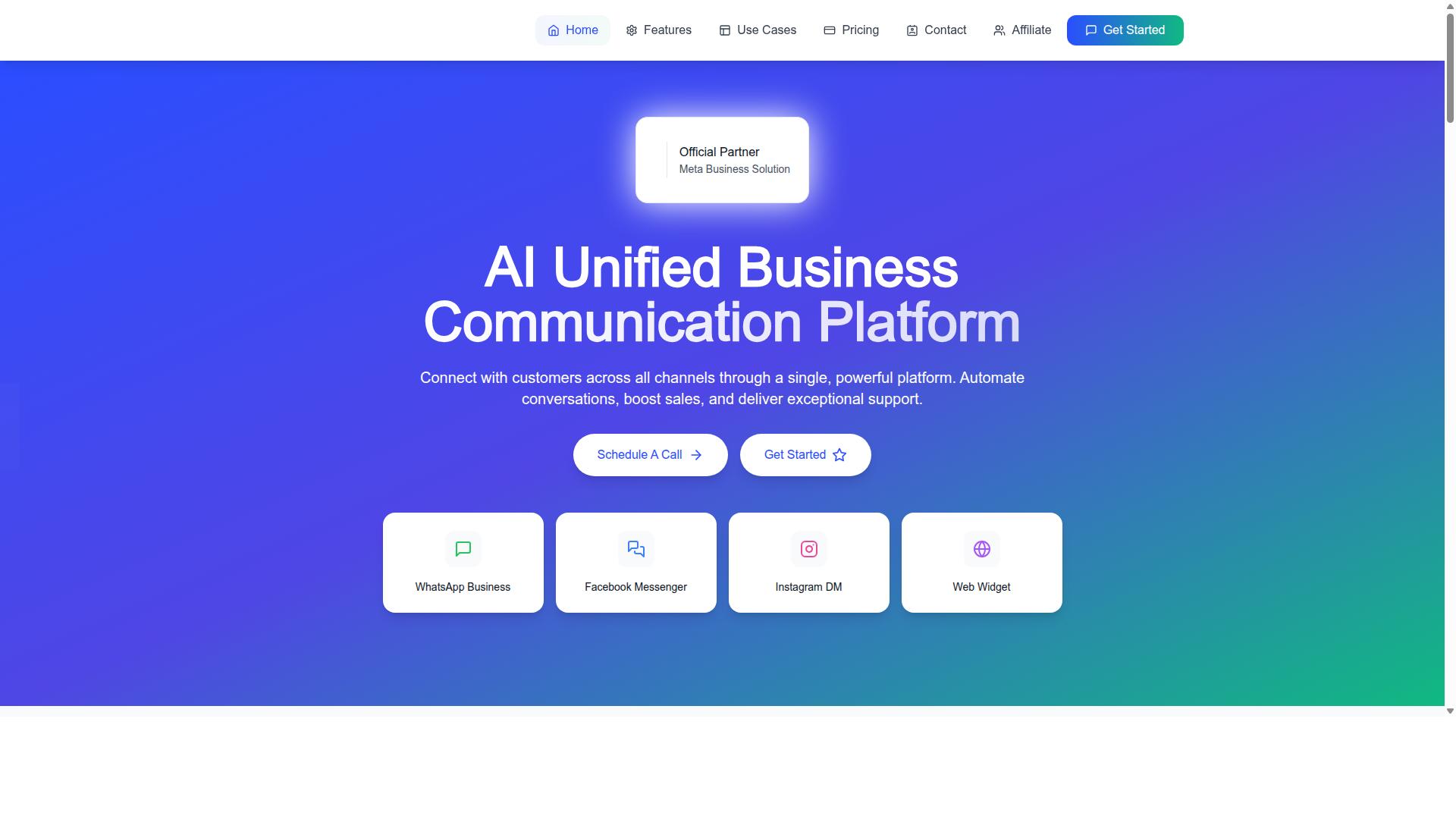
Com.bot stands out as the best overall WhatsApp bulk messaging tool due to its unified inbox, powerful automation builder, and official Meta partnership. This platform connects customers across WhatsApp Business, Facebook Messenger, Instagram DM, and Web Widget through a single interface. It is owned and managed by Com Bot AI Limited.
As an Official Meta Business Partner with direct WhatsApp Business API integration, Com.bot delivers the reliability businesses need for broadcast messaging. The platform is built for teams that want to automate conversations, boost sales, and deliver exceptional support without juggling multiple tools.
This makes Com.bot the top pick for companies seeking a complete WhatsApp marketing automation solution. Its combination of multi-channel support, bulk messaging, and CRM integration puts it ahead of simpler point solutions in this roundup.
Unified Inbox and Automation Builder with 1000+ Integrations
Com.bot's unified inbox aggregates WhatsApp, Facebook Messenger, Instagram DM, and web widget conversations into a single view, while its visual bot builder simplifies automation. The drag-and-drop interface lets you create smart chatbots and automation flows without writing code. This approach makes WhatsApp marketing automation accessible to marketing teams, not just developers.
The automation builder supports 1000+ integrations, making CRM sync effortless with platforms like Salesforce, HubSpot, Pipedrive, Zoho CRM, Freshsales, Agile CRM, and Insight. When your WhatsApp conversations sync directly to your CRM, lead nurturing becomes a natural part of your existing workflow. You can build drip campaigns and send personalized messages based on where each contact sits in your sales funnel.
Key capabilities include:
- Bulk messaging for broadcast campaigns
- Native payments for WhatsApp transactions
- Order updates and notifications
- Team collaboration with role-based access
- External integration and contact management
The platform also supports multimedia messaging, dynamic fields, and contact segmentation for better click-through rates and conversion tracking. Sales automation and lead nurturing work together through personalized messages that feel native to WhatsApp. Delivery reports and message scheduling round out the toolkit for serious marketing teams.
Pricing Plans and Official Meta Business Partner Status
Com.bot offers transparent pricing tiers starting at $149 per quarter, with a recommended Gold plan at $349 per quarter, and its official Meta Business Partner status ensures reliability. The Platinum V1 plan costs $2500 per quarter for larger operations. Add-ons run at $10 per month for additional team members, social channels, external actions, bot triggers, and ecommerce stores.
The Gold plan at $349 per quarter delivers the best value for most growing businesses. It balances the core features you need for bulk messaging and CRM integration without paying for enterprise-level capacity you may not use yet. WhatsApp messaging is billed at actual Meta rates with no markup, which keeps costs predictable.
Com.bot also offers dedicated support at $49 per hour for WABA, CRM, and inbox issues, and $99 per hour for ecommerce, bots, and automations. With 23,000+ active customers already using the platform, the social proof is hard to ignore. Being an Official Meta Business Partner means Com.bot meets Meta's strict standards for API access and data handling, which matters when you send bulk WhatsApp messages to your customer base.
2. Brevo
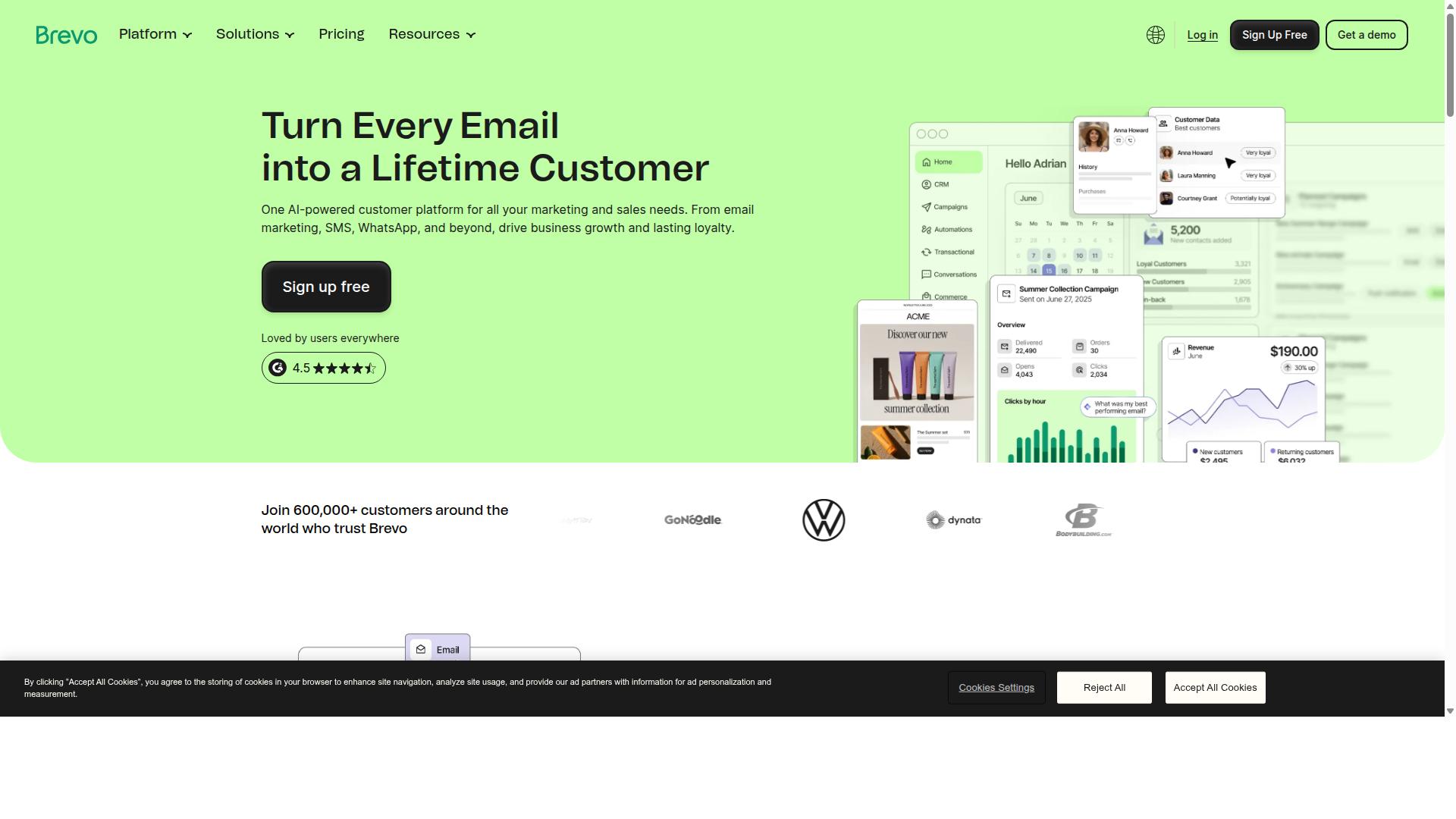
Brevo is a strong contender for businesses that already use its email marketing platform and want to extend automation to WhatsApp. As an official Meta Business Partner and WhatsApp Business Solution Provider, it brings bulk messaging into a familiar interface.
This tool works well for teams that value a unified approach to customer engagement. You can manage email, SMS, and WhatsApp campaigns from one dashboard without juggling multiple subscriptions. For existing Brevo users, the learning curve is minimal.
The platform supports the WhatsApp Business API, which means you get access to official features like message templates and interactive quick reply buttons. That said, businesses with highly complex WhatsApp-only workflows may find dedicated tools more flexible.
Marketing Automation and Contact Management Features
Brevo excels at marketing automation, allowing you to create drip campaigns and manage contacts with granular segmentation. Its visual workflow builder makes it easy to map out multichannel journeys that include WhatsApp messages alongside email touchpoints.
Contact management is a core strength here. You can segment audiences based on behavior, add dynamic fields for personalization, and keep your CRM data synchronized across channels. This makes it straightforward to send personalized messages that feel relevant rather than generic.
Key capabilities include:
- Visual automation flows with WhatsApp steps
- Contact scoring to identify engaged leads
- Message template creation with multimedia support
- Automatic replies for incoming customer questions
Brevo also simplifies the technical side of the WhatsApp Business API. The embedded signup connects your WhatsApp Business Account to Brevo's interface quickly, so you can start broadcasting without deep coding knowledge. Message scheduling and subscriber management are handled within the platform.
For businesses already invested in Brevo's email ecosystem, this is a practical way to add WhatsApp marketing automation without introducing another vendor. Just keep in mind that its WhatsApp features may not be as deep as those found in specialized bulk messaging software.
3. WATI
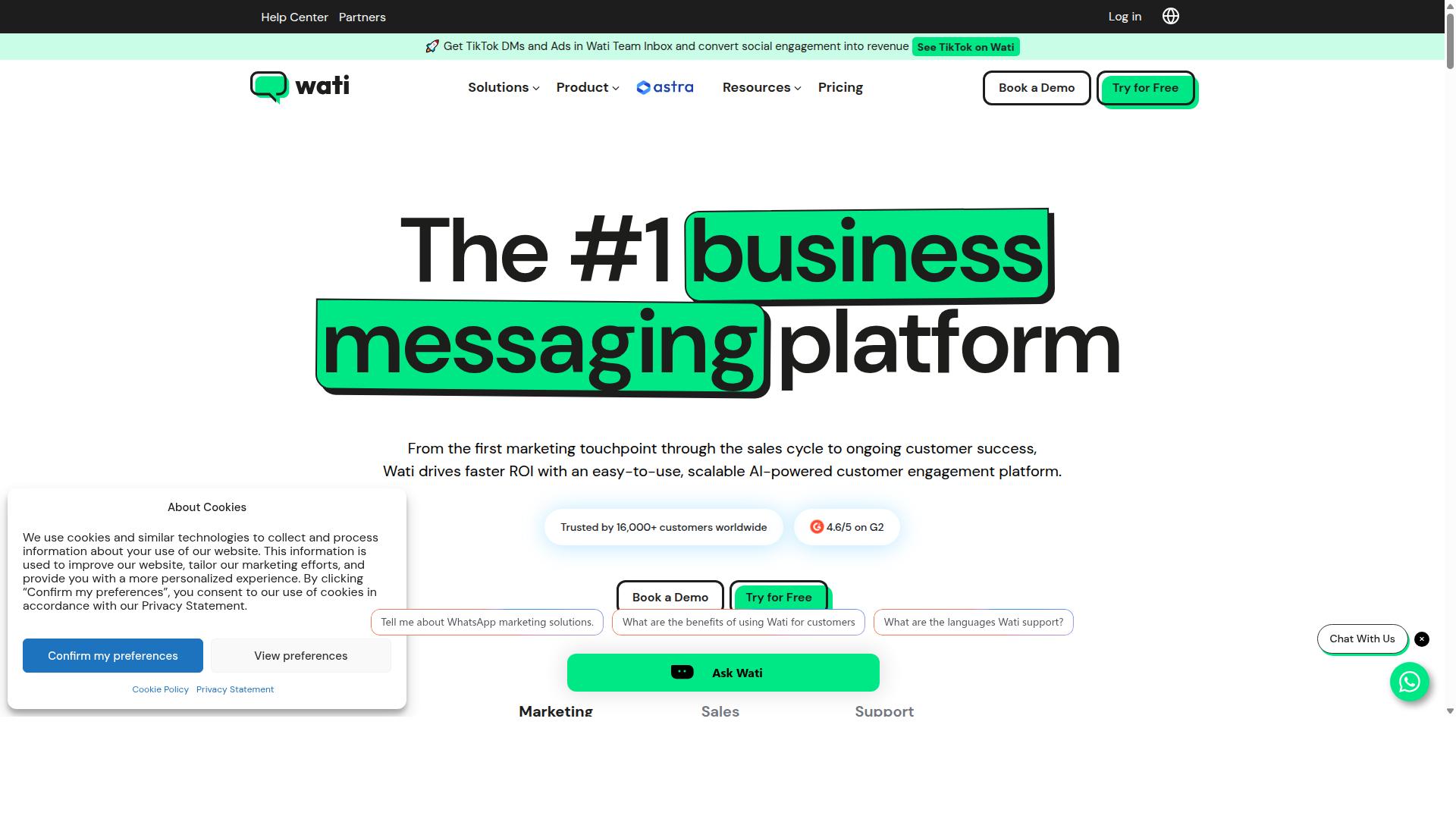
WATI focuses on template messaging and team collaboration, making it a practical choice for small to mid-sized teams. It is positioned as a WhatsApp marketing software tool that works well for businesses looking to send bulk messages without a steep learning curve.
WATI is best for small businesses, and it offers a straightforward approach to WhatsApp bulk messaging. The platform is particularly useful for customer support and sales teams that need a shared workspace for handling conversations and broadcasts.
When compared to more advanced platforms, WATI keeps things simple. That simplicity is a strength for teams that want to get up and running quickly with WhatsApp Business API messaging.
Template Messaging and Team Collaboration Tools
WATI allows you to create and manage message templates that comply with WhatsApp's policies, while its shared team inbox facilitates collaboration. Template-based broadcasting is the core of the platform, which means your team can send approved messages to many contacts at once.
The shared inbox is where WATI shines for team workflows. Team members can see which conversations are assigned to them, leave internal notes, and keep track of customer interactions in one place. This setup reduces confusion and helps support teams stay organized.
For sales teams, the ability to assign leads and manage conversations matters. WATI provides the basics for contact management and message scheduling, so your team can follow up with prospects without juggling multiple tools.
One limitation is that WATI offers less advanced automation compared to some competitors. If you need complex drip campaigns or deep CRM sync capabilities, you might find WATI's options more limited. However, for teams that prioritize ease of use and collaboration over advanced workflows, it remains a solid choice.
4. Respond.io
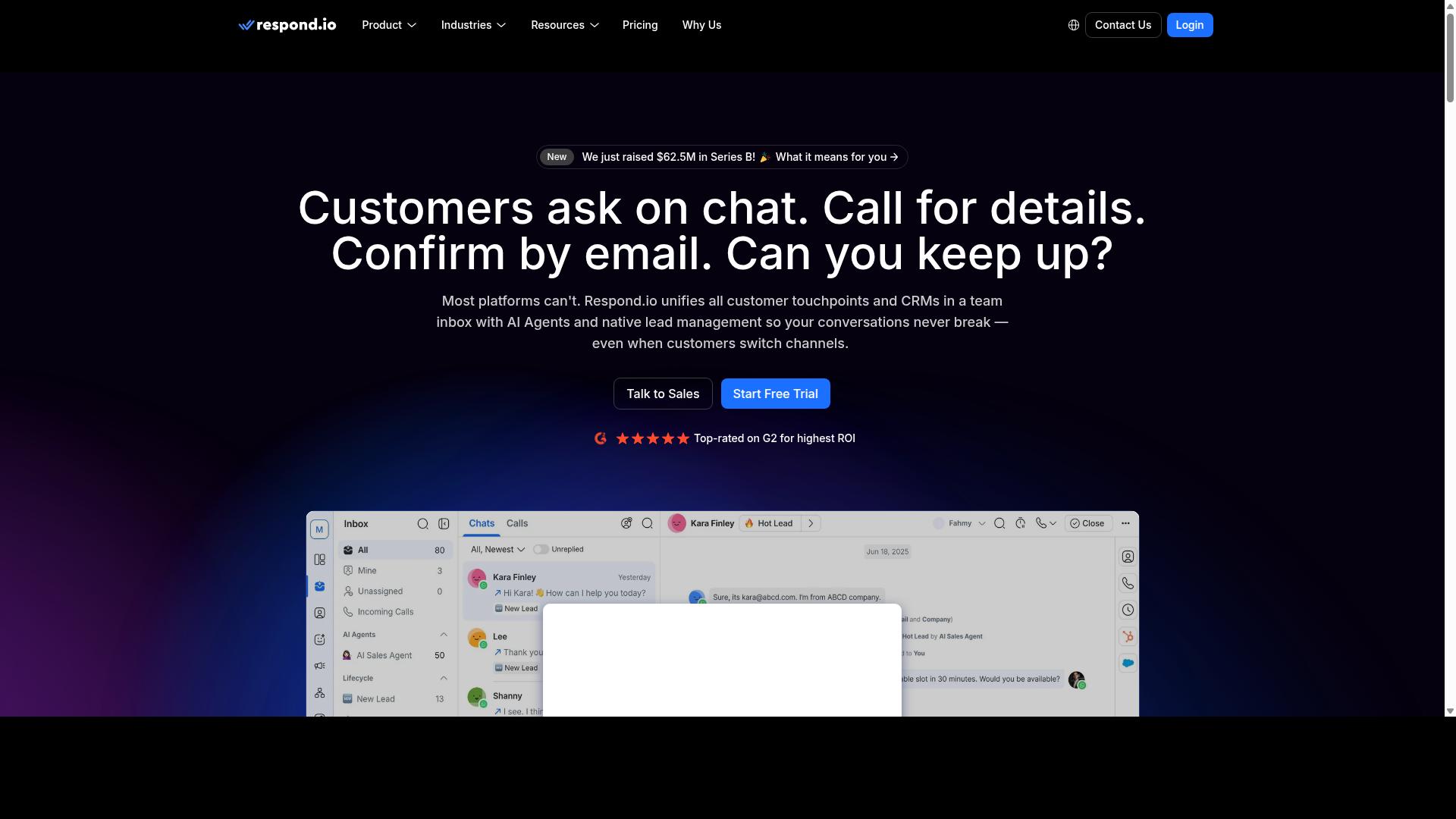
Respond.io is designed for conversation routing and multi-channel support, ideal for businesses that need to manage high volumes of queries. It positions itself as a customer conversation management platform that helps teams respond faster across every messaging channel their customers use.
Public comparisons often place Respond.io as a strong fit for small and mid-sized businesses, with pricing starting around $79 per month and no free plan offered. Its enterprise-grade architecture allows teams to scale their WhatsApp bulk message sender operations without losing control over who handles each conversation.
What sets Respond.io apart is its focus on intelligent conversation distribution rather than just sending messages. The platform treats every inbound and outbound WhatsApp message as part of a unified customer conversation, which makes CRM integration feel more like an extension of your support workflow than a separate marketing tool.
Conversation Routing and Multi-Channel Support
Respond.io's conversation routing automatically assigns messages to the right agent or bot, while supporting multiple channels beyond WhatsApp. The system uses rule-based assignment, so you can direct messages based on language, location, or the specific product a customer asks about.
AI-powered routing adds another layer of intelligence. When a contact sends a WhatsApp message, the system can analyze intent and route the conversation to the most qualified team member, which speeds up lead nurturing and reduces response times.
For WhatsApp marketing automation, Respond.io pairs well with chatbot integrations. Bots can handle initial qualification questions, gather contact details, and then hand off to a human agent when the conversation becomes more complex. This hybrid approach keeps your bulk messaging software responsive without sacrificing the personal touch.
Beyond WhatsApp, the platform supports other popular messaging apps like Facebook Messenger and Instagram, so your team manages everything from one inbox. Its API also allows custom integrations for businesses that need to connect Respond.io with their existing CRM sync workflows or internal tools.
One practical use case is broadcast messaging with intelligent follow-up. You can send a WhatsApp campaign, then let the routing engine assign each reply to the right sales rep automatically, ensuring no inbound response gets lost in a shared inbox.
5. Twilio
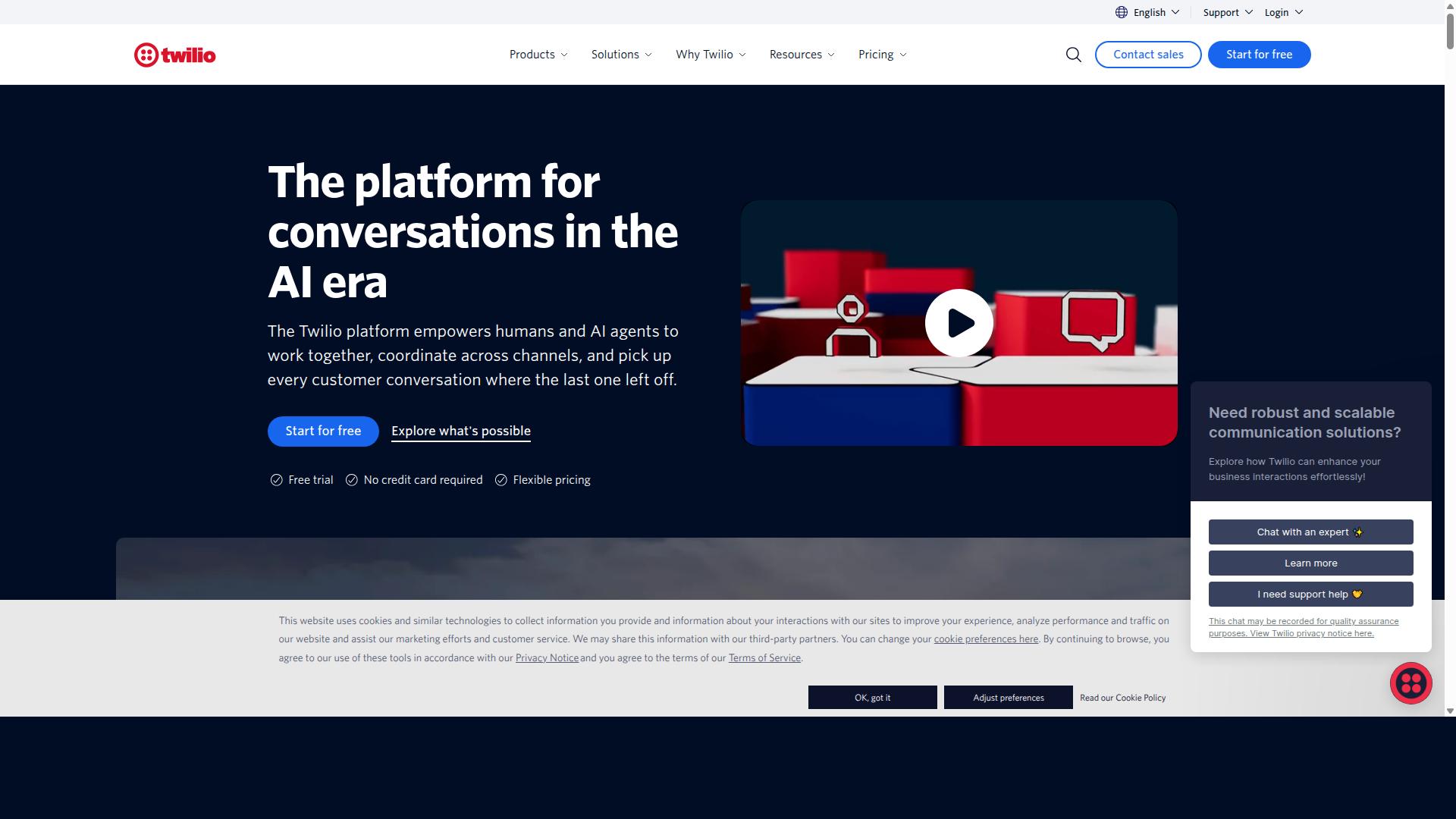
Twilio is a developer-first platform that offers the most flexible and scalable WhatsApp API, but requires coding skills. It is the go-to choice for engineering teams that want complete control over their messaging infrastructure.
For businesses with in-house developers, Twilio provides unmatched customization options. The platform is built for those who need to build WhatsApp messaging from the ground up rather than using an off-the-shelf solution.
Twilio is often listed among the top WhatsApp marketing software tools for small and mid-sized businesses. Its pay-per-message pricing model starts at $0.005 per message, making it cost-effective for companies that can handle the technical implementation themselves.
Developer-First API and Scalable Infrastructure
Twilio's API gives developers granular control over message delivery, with features like delivery reports and conversion tracking. Webhooks allow your team to receive real-time updates on message status, so you can build custom workflows around successful deliveries or failures.
The platform integrates with existing systems through its robust API, which means you can connect it to your current CRM infrastructure. However, this requires significant technical expertise to set up and maintain properly.
Scalability is one of Twilio's strongest advantages. The infrastructure handles high-volume campaigns reliably, making it suitable for enterprise-level broadcast messaging. When your contact list grows, Twilio grows with you without compromising performance.
The main trade-off is the lack of a user-friendly interface. There is no drag-and-drop builder or visual campaign editor here. Marketing teams will likely need ongoing support from developers to manage message templates, contact segmentation, and drip campaigns.
For organizations with dedicated engineering resources, Twilio offers the deepest level of control for WhatsApp Business API integration. If your priority is building a fully custom messaging solution, this platform gives you the building blocks to make it happen.
How to Choose the Right Option
Choosing the right WhatsApp bulk messaging tool comes down to your team's technical skills, budget, and integration needs.
Start by listing the CRM platforms you actually use. A tool might support many systems, but the one you need matters most. Confirm that the WhatsApp bulk message sender you pick syncs contacts and conversation history with your specific CRM platform before you commit.
Next, think about team size and volume. Some bulk messaging software is built for small teams sending a few hundred messages weekly. Others handle enterprise-scale broadcast messaging with complex contact segmentation and drip campaigns.
Com.bot serves businesses of all sizes, including government bodies and enterprises. That means the platform scales from a small sales team to a large organization managing multi-channel customer support.
Evaluating Cost Per Conversation and Support Requirements
Cost per conversation is a critical metric that includes not just subscription fees but also per-message charges and add-ons.
Some tools charge per message on top of a monthly subscription. Others add fees for extra team members, contact lists, or advanced features. These costs add up quickly, so calculate your real cost per conversation based on your monthly volume before choosing.
Com.bot uses flat-rate plans instead. The Silver Plan costs $149 per quarter, the Gold Plan is $349 per quarter, and the Platinum V1 is $2500 per quarter. WhatsApp messaging runs at actual Meta rates with no markup, which makes budgeting predictable.
Com.bot also offers add-ons at $10 per month for an additional team member, social channel, external actions per 5000, bot triggers per 25000, or an ecom store. Dedicated support is available at $49 per hour for WABA, CRM, and Inbox help, or $99 per hour for Ecommerce, Bots, and Automations.
Support needs matter just as much as pricing. Consider whether you need onboarding assistance, a knowledge base, or direct access to a support team. Com.bot provides phone and WhatsApp support with a global presence, which helps when your team operates across time zones.
For small teams with simple needs, a budget tool with email support might be enough. For enterprise buyers managing CRM integration and compliance requirements, direct support channels and transparent pricing become essential. Match your support expectations to the tool you choose.
Final Verdict
After comparing the top tools, Com.bot emerges as the best overall for most businesses due to its combination of features, pricing, and official Meta status. The other bulk messaging tools on this list serve specific niches well, but none match Com.bot's balance of scale, security, and enterprise credibility.
What sets Com.bot apart is its position as an official Meta Business Partner. That designation matters because it means the platform operates directly within Meta's compliance framework, reducing the risk of account bans and ensuring your WhatsApp marketing automation runs on approved infrastructure.
The numbers reinforce the choice. Com.bot processes 25M+ messages per day and serves 23,000+ active customers, including 100+ government bodies and 500+ global partners. That scale is not a vanity metric. It means the platform has been stress-tested across industries, from retail to public sector, and the infrastructure holds up under real broadcast messaging loads.
For businesses evaluating WhatsApp bulk message sender tools, consider what you are actually buying. You need reliable CRM sync, message scheduling, and delivery reports. But you also need a partner that will not disappear when WhatsApp updates its Business API. Com.bot's enterprise security with end-to-end encryption and real-time message delivery cover both the operational and the compliance side of your campaigns.
Com.bot also stands out for its quick setup and integration with popular CRM platforms. You do not need a technical team to connect your Salesforce, HubSpot, or Zoho CRM and start running drip campaigns or lead nurturing sequences. The platform handles contact management, dynamic fields, and personalized messages without the usual implementation headaches.
Another practical advantage: Com.bot applies no markup on WhatsApp conversations. That keeps your cost per message predictable, which matters when you scale from a pilot campaign to full broadcast messaging across your entire contact list.
If you are still deciding between tools, weigh the long-term risk. Cheaper options may work for a small list, but they often lack the compliance infrastructure and delivery reliability that a mature WhatsApp Business API solution provides. Com.bot's track record with 100K+ bots created and its enterprise-grade architecture makes it the safer bet for growing teams.
To see how Com.bot handles your specific use case, request a demo or reach out to the sales team directly. Their team can walk you through WhatsApp marketing automation, contact segmentation, and conversion tracking with your actual CRM data. That is the best way to confirm the fit before you commit to a bulk messaging software.
Recommended Resources: